Glycerine Exhibition
Puzzle Gallery, Chippendale
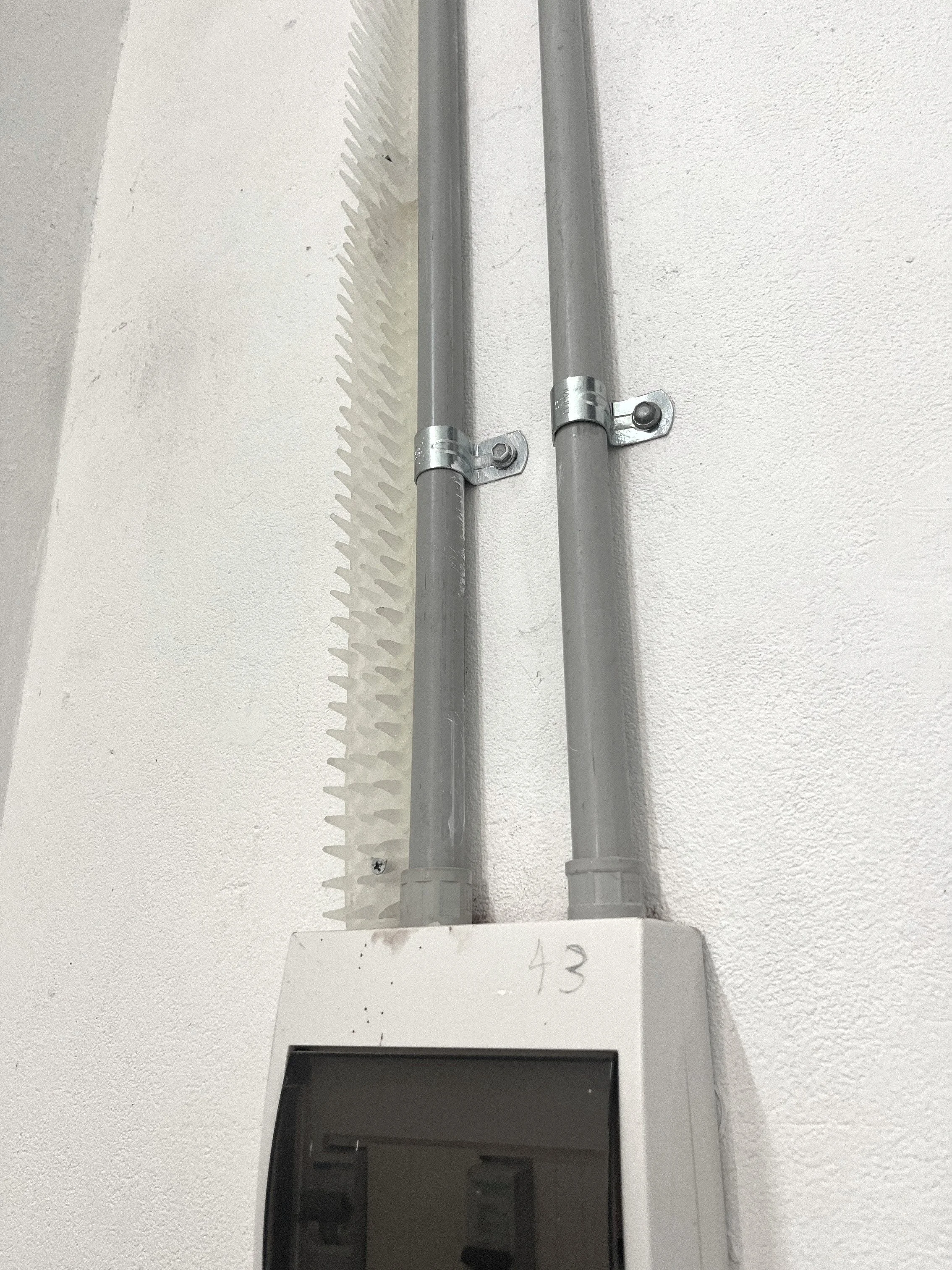
In 2017, police and council evicted a Tent City of people protesting for housing rights. Now, metal spikes and concrete slabs litter the ground where bodies once lay while seat separators quietly negotiate the line of comfort between classes.
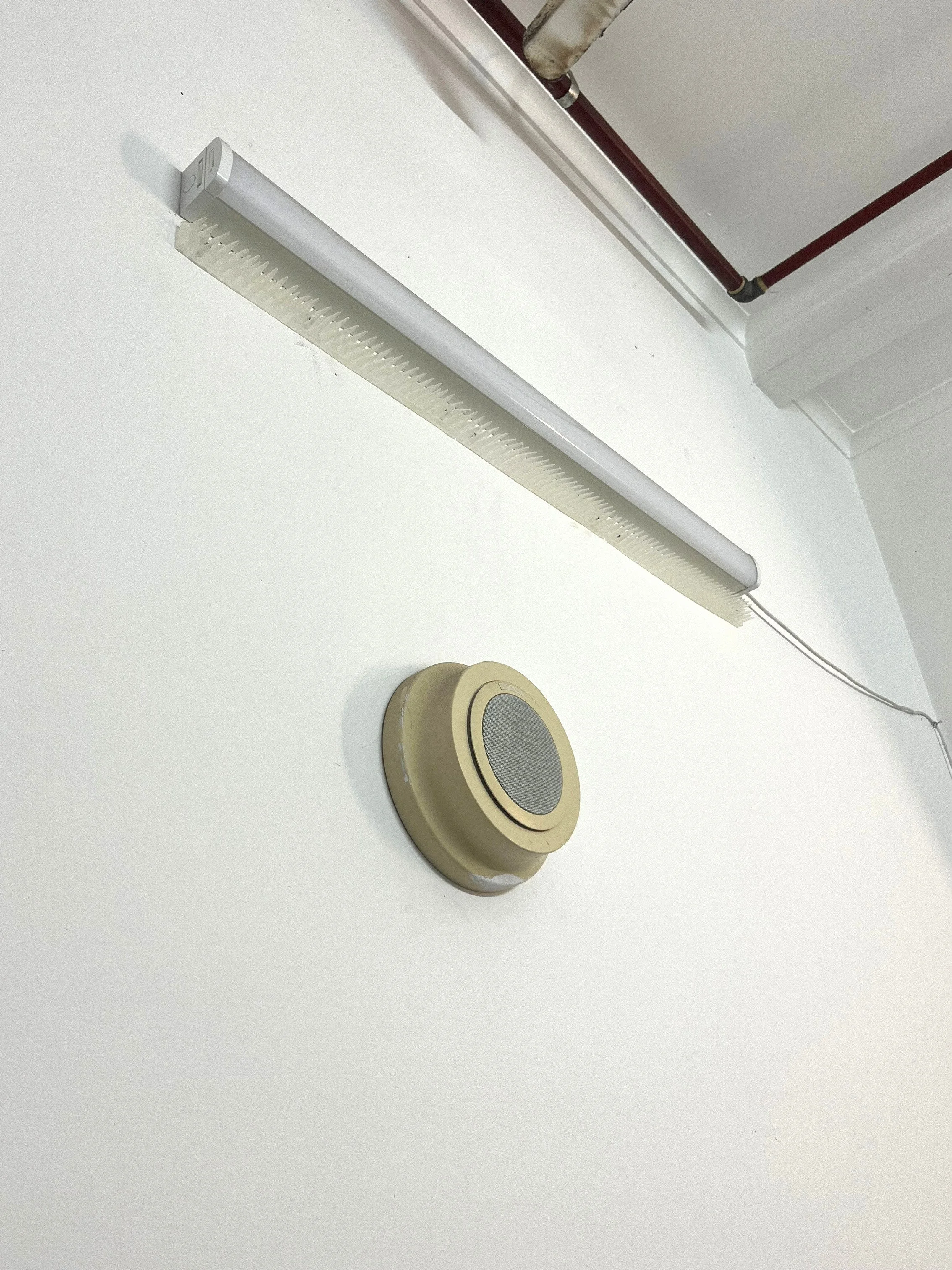
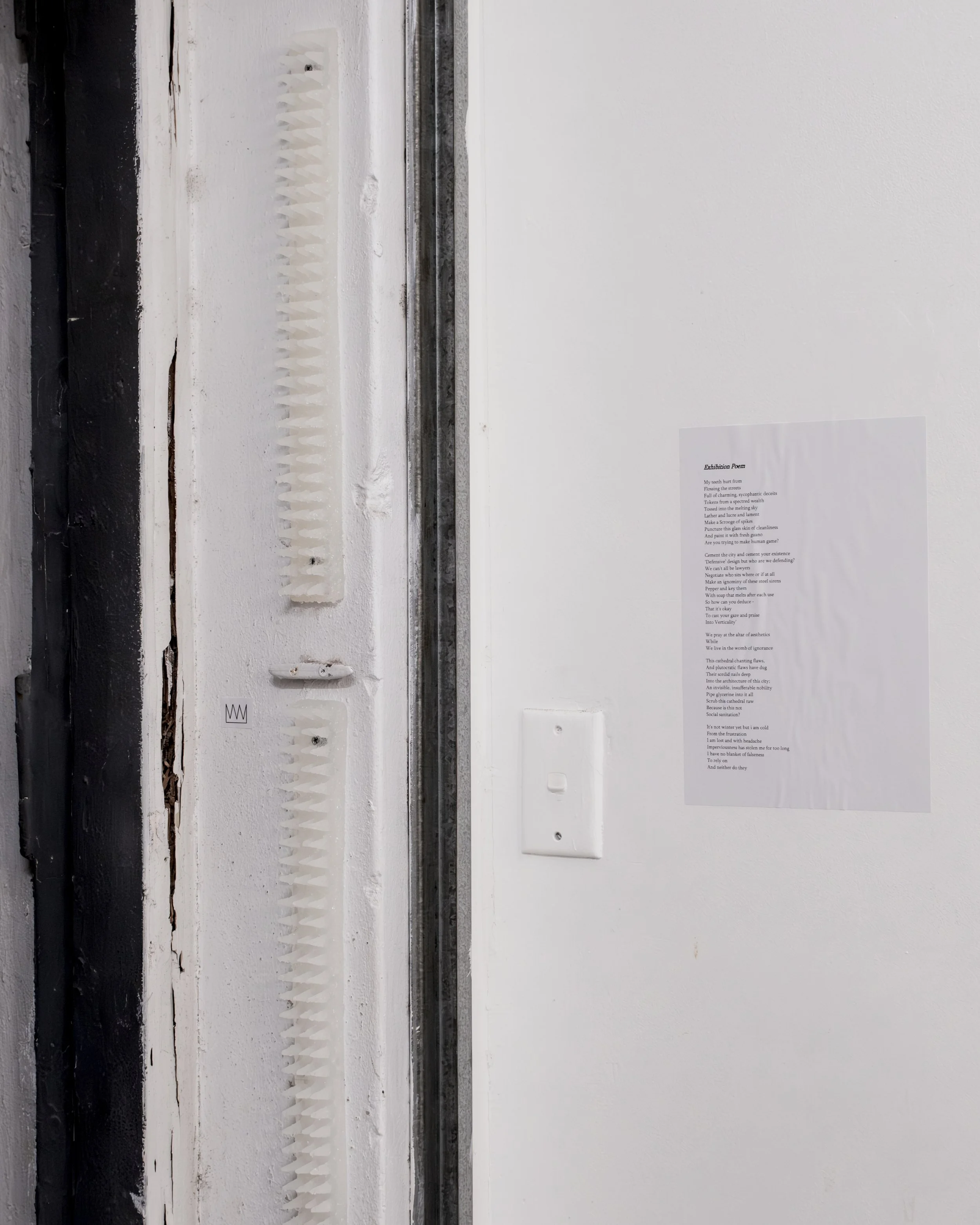
Weaponizing the materiality of cleaning products, Glycerine critiques the motives of hostile architecture, the hazardous design that deters birds, climbing, graffiti, and the unhoused.
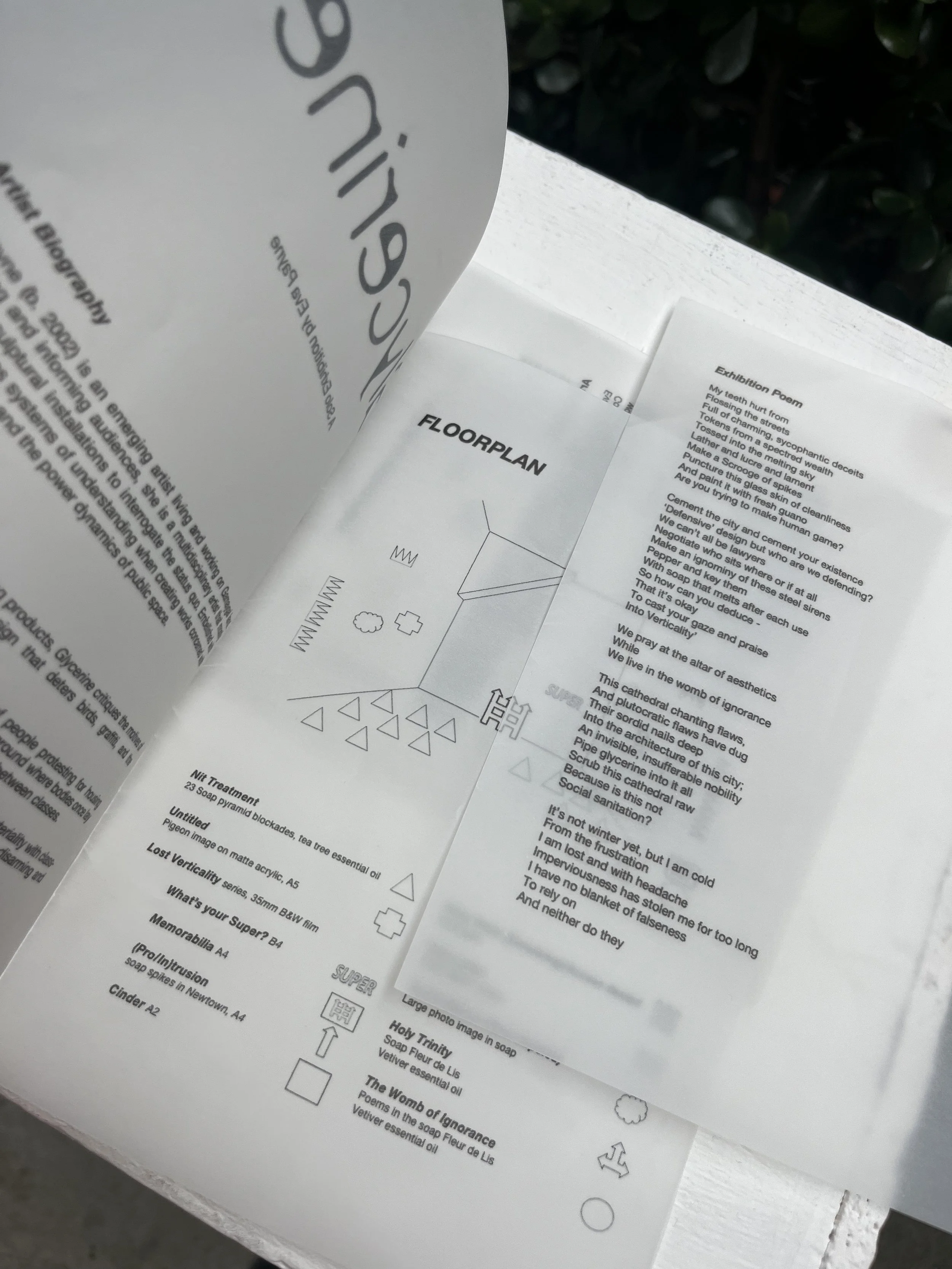
Soap sweats like human skin and shares its pH. Combining this material with class-driven, exclusionary design, Payne wrestles with the idea of social sanitation and disarms and dissolves it with ephemerality, folding the material back into itself.
Works from the exhibition
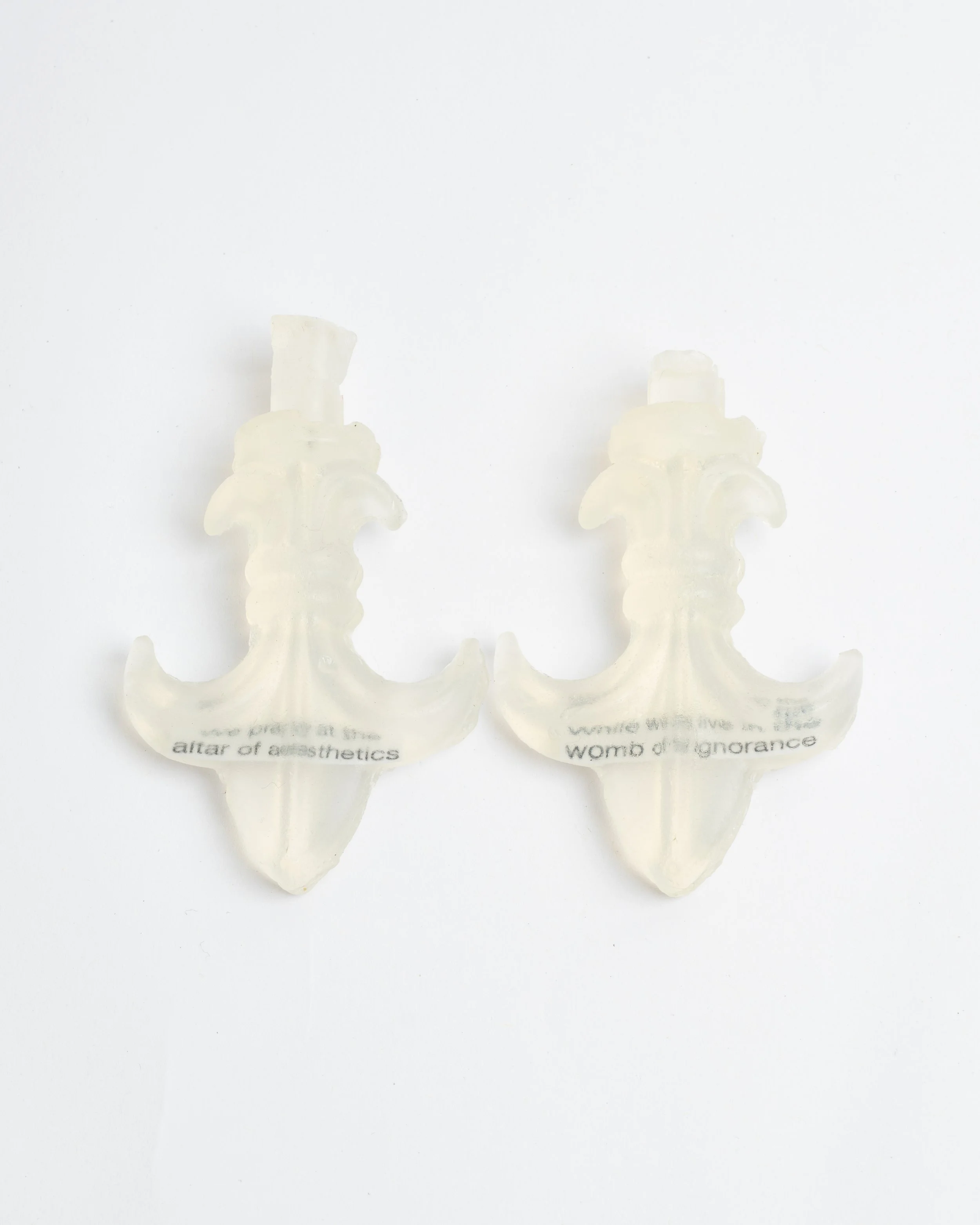
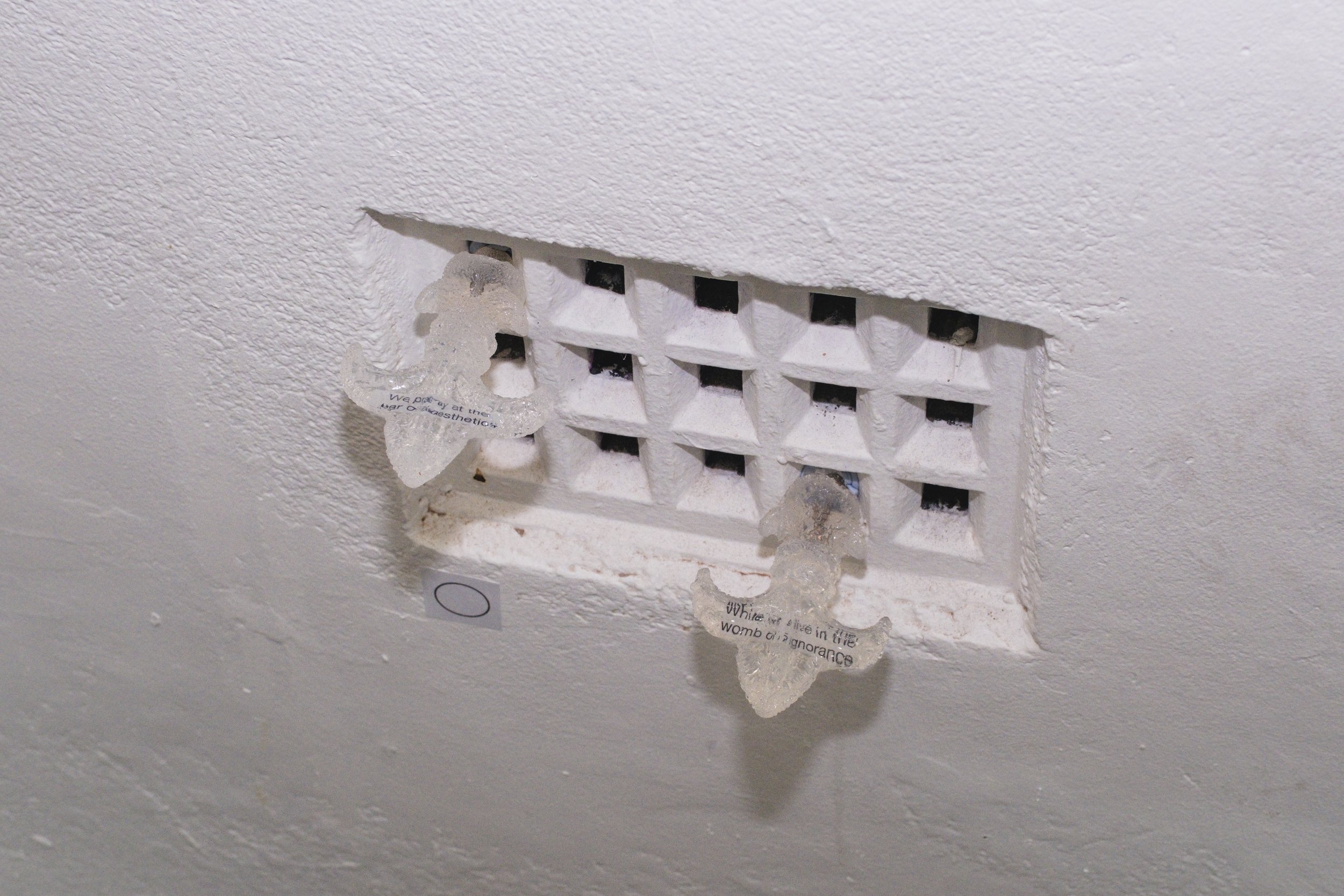
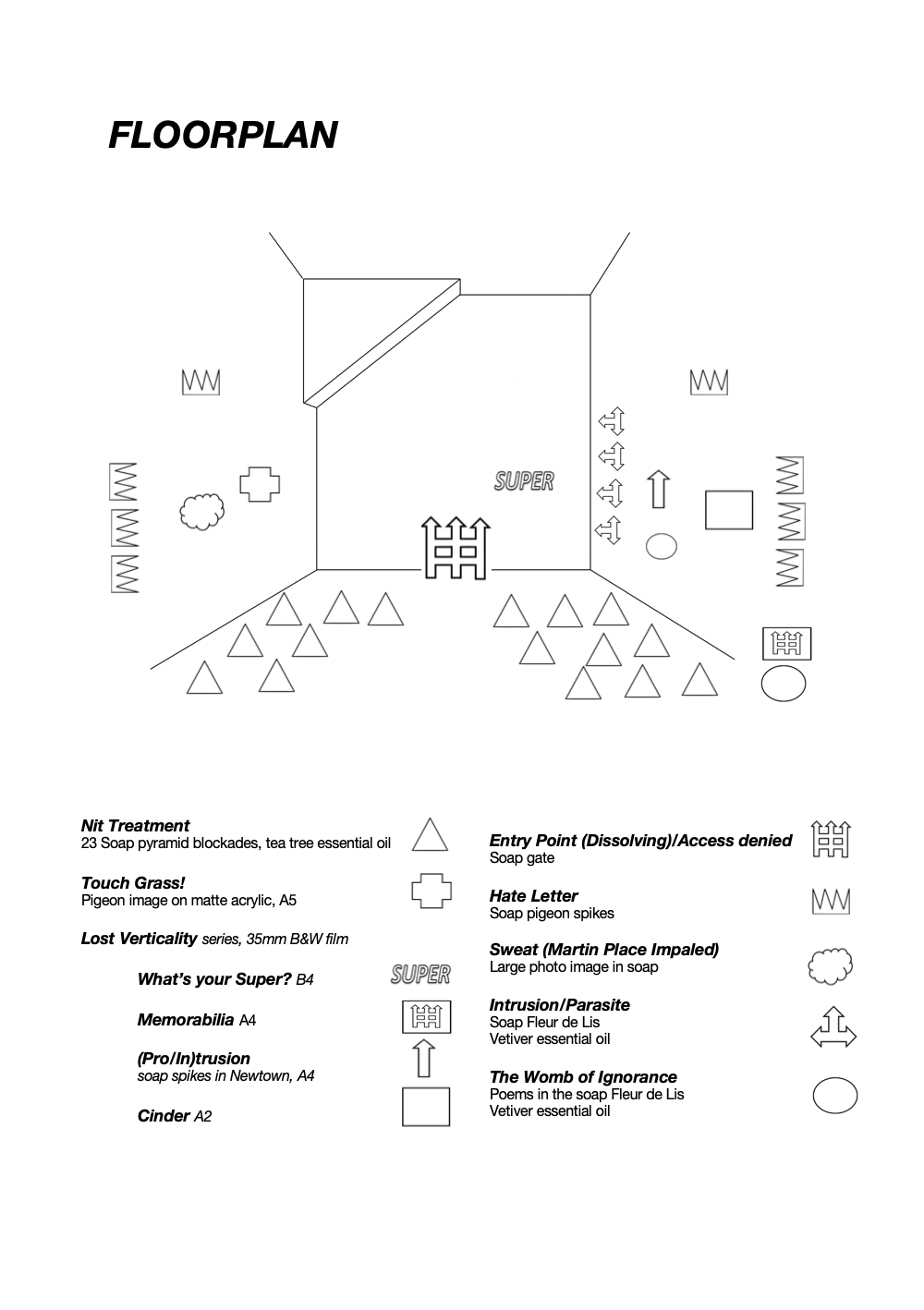
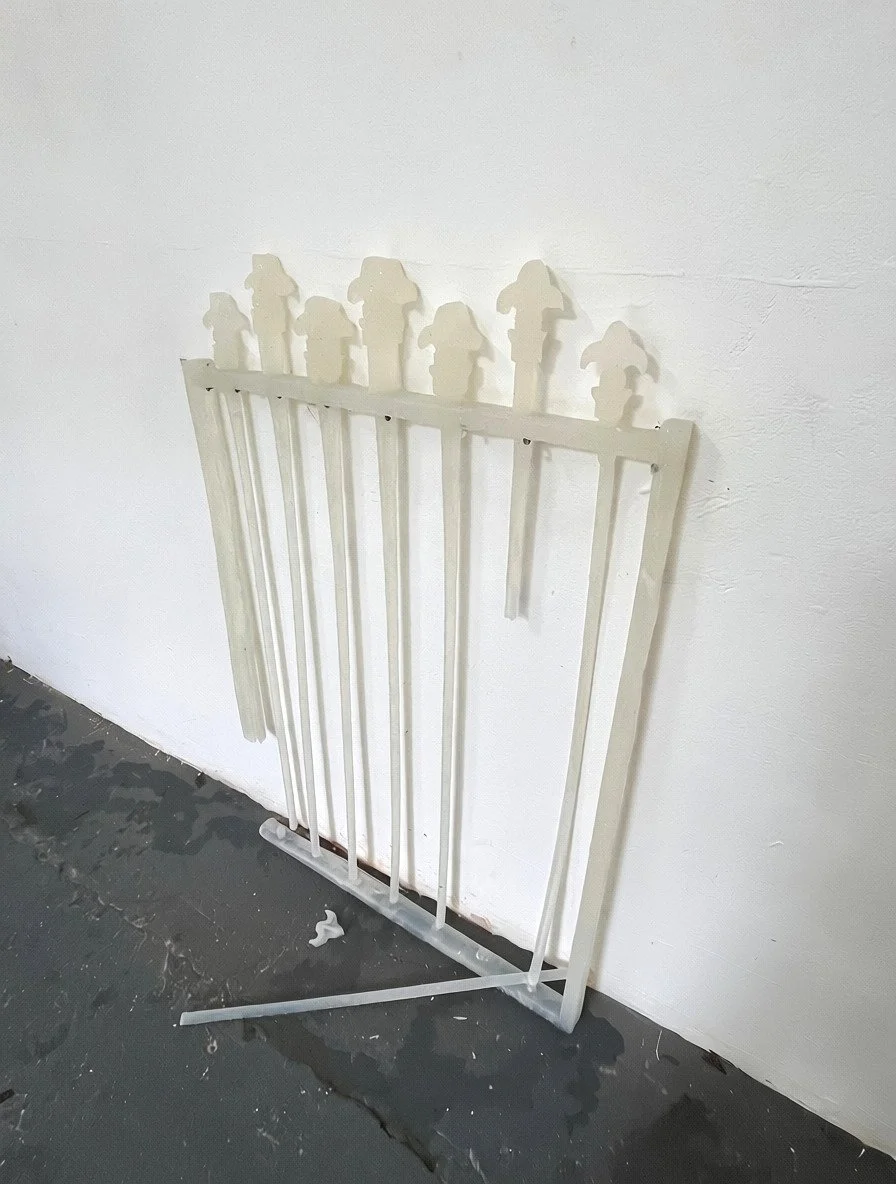
Historically used to crown gothic fences, Fleur De Lis’ symbolise confinement and exclusion, categorising and controlling public space through the notion of ownership. Under this guise, public mobility is a paid subscription divided by class and privilege.
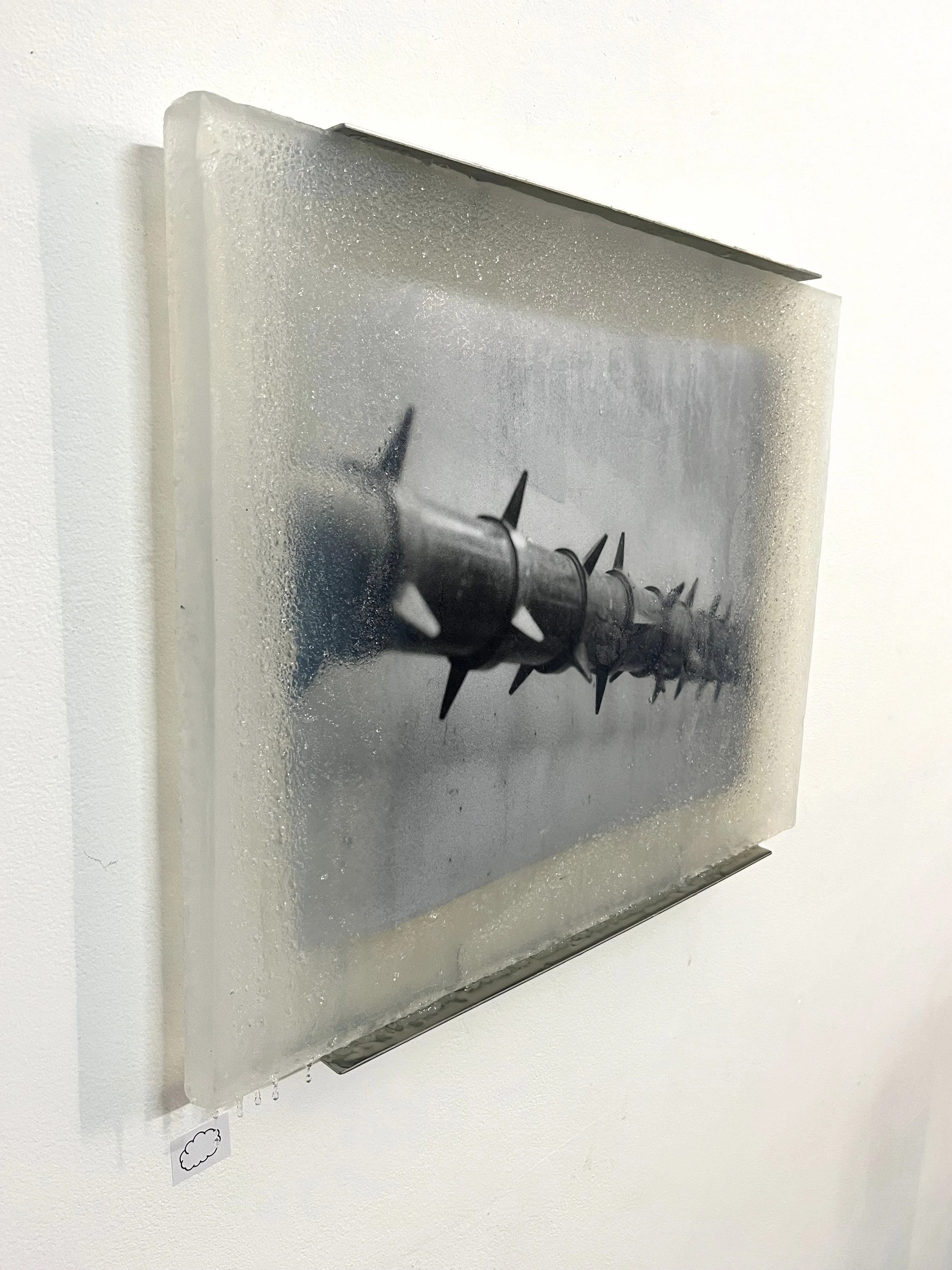
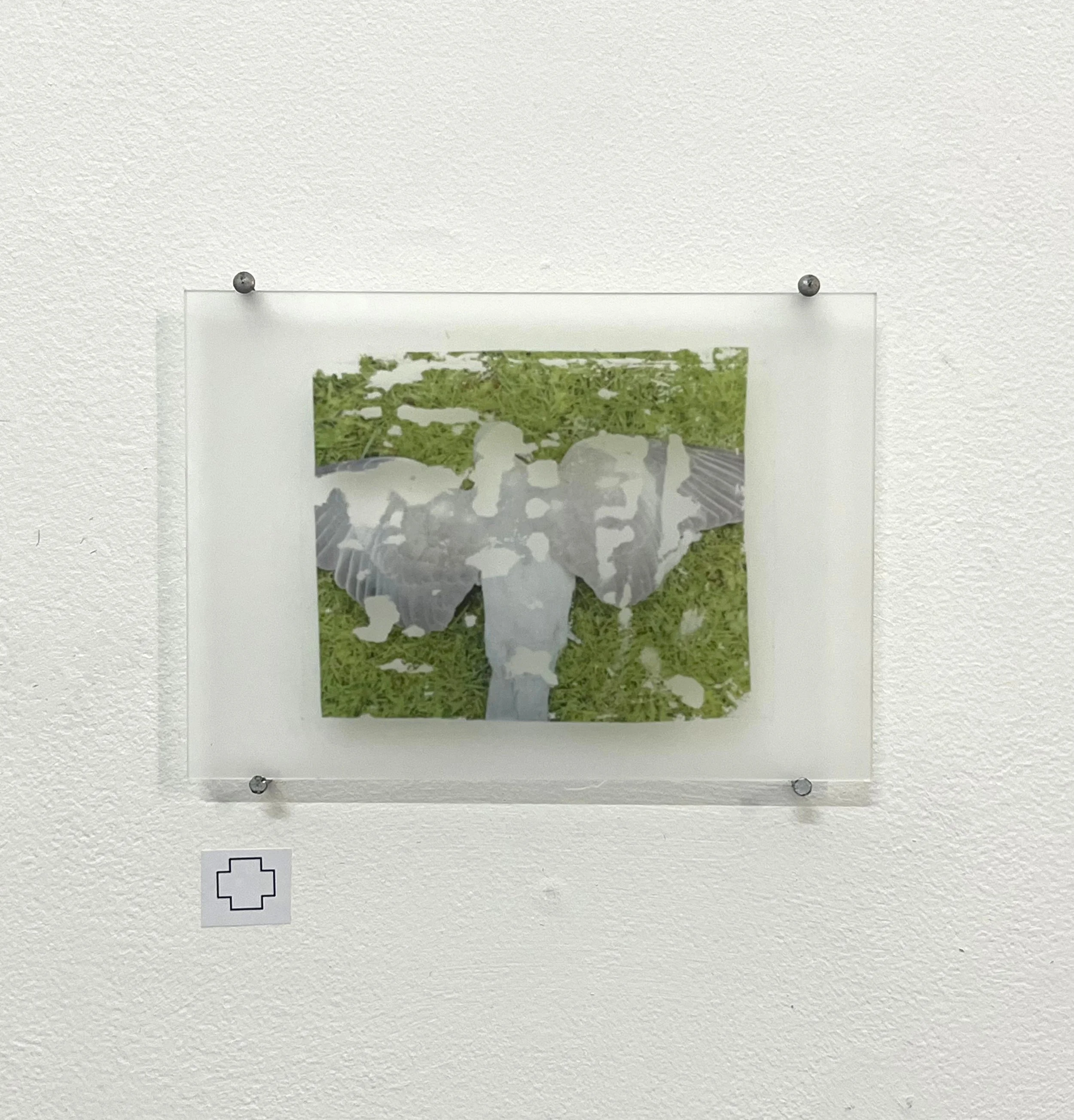
Encasing an image of a metal spike in glycerine soap, the work emulates human perspiration and bodily fluid and thus subjugates the permanence and authority these structures aim to project.
Womb of Ignorance
Soap, vetiver essential oil
Untitled
Pigeon image on matte acrylic (A5)
Claude De Bussy
Soap fleur de lis' duo scented with vetiver essential oil
Sweat
A3 printed 30mm film photograph, soap, metal
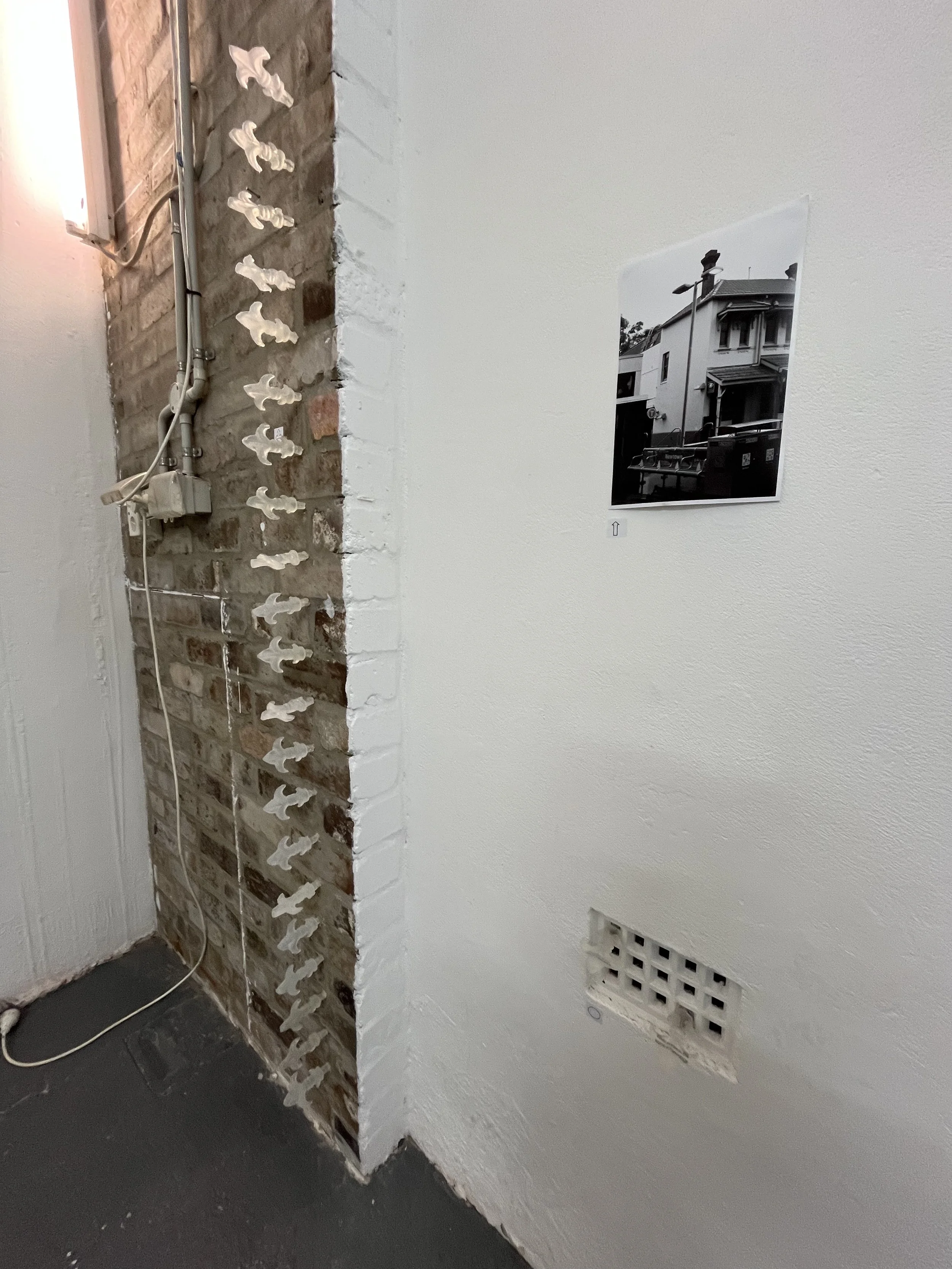
Denied Access
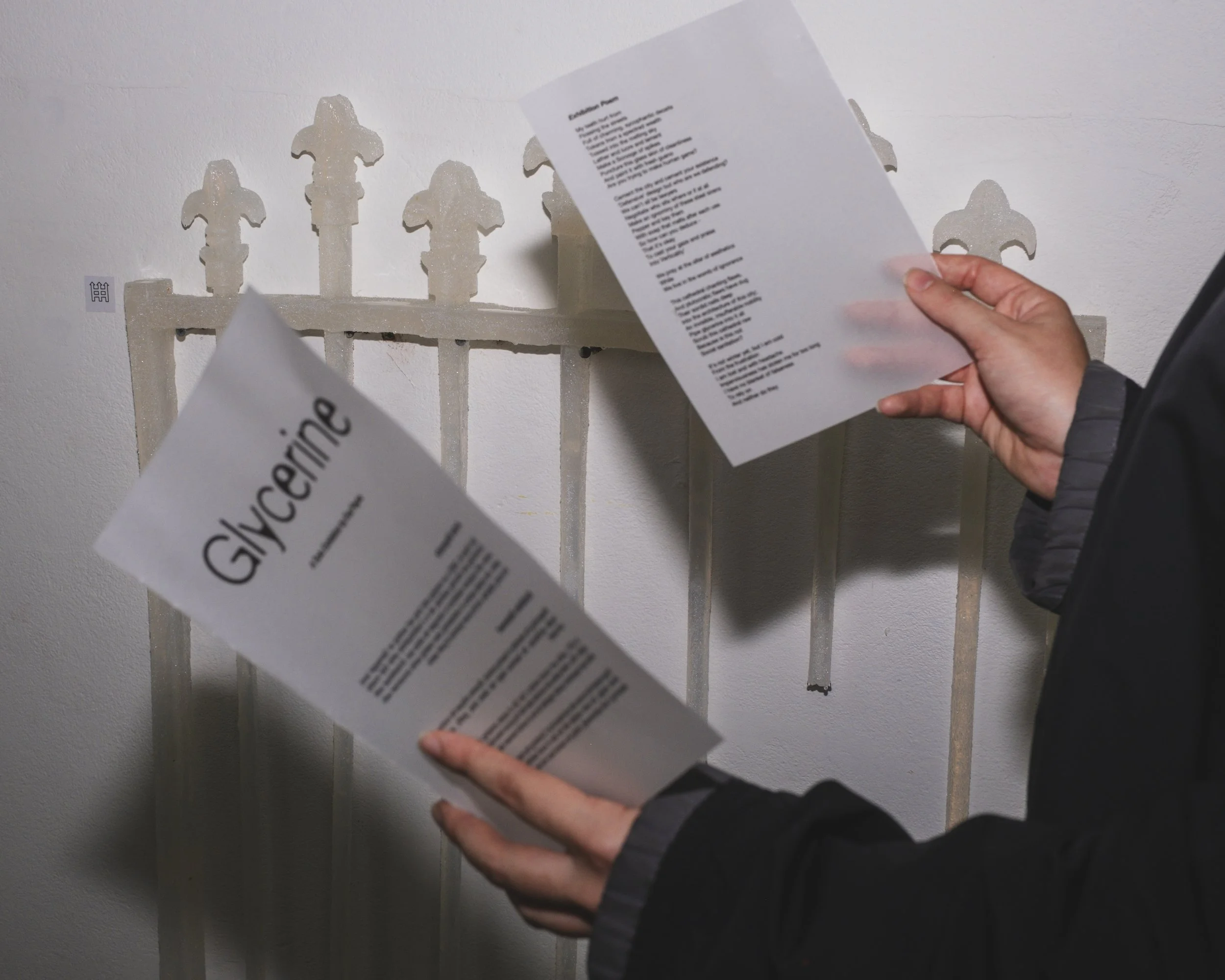
20 kg of soap casted into a gothic fleur de lis fence
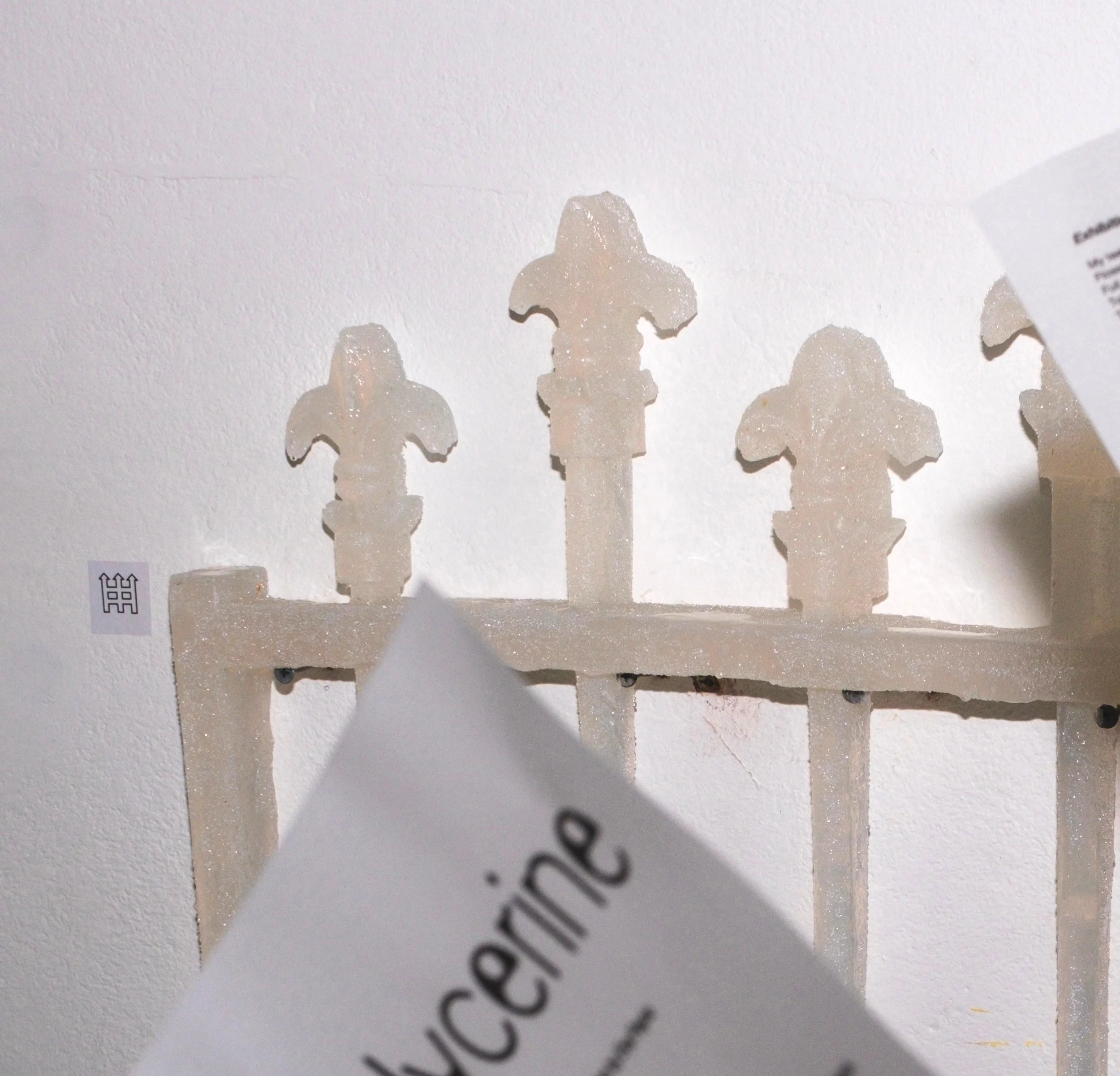
Birthed in the gothic era, this style (or any style) of fence symbolises confinement and exclusion, categorising and controlling public space through the notion of ownership. Under this guise, public mobility is a paid subscription divided by class and privilege; those who ‘have’ homes, and those who do not.
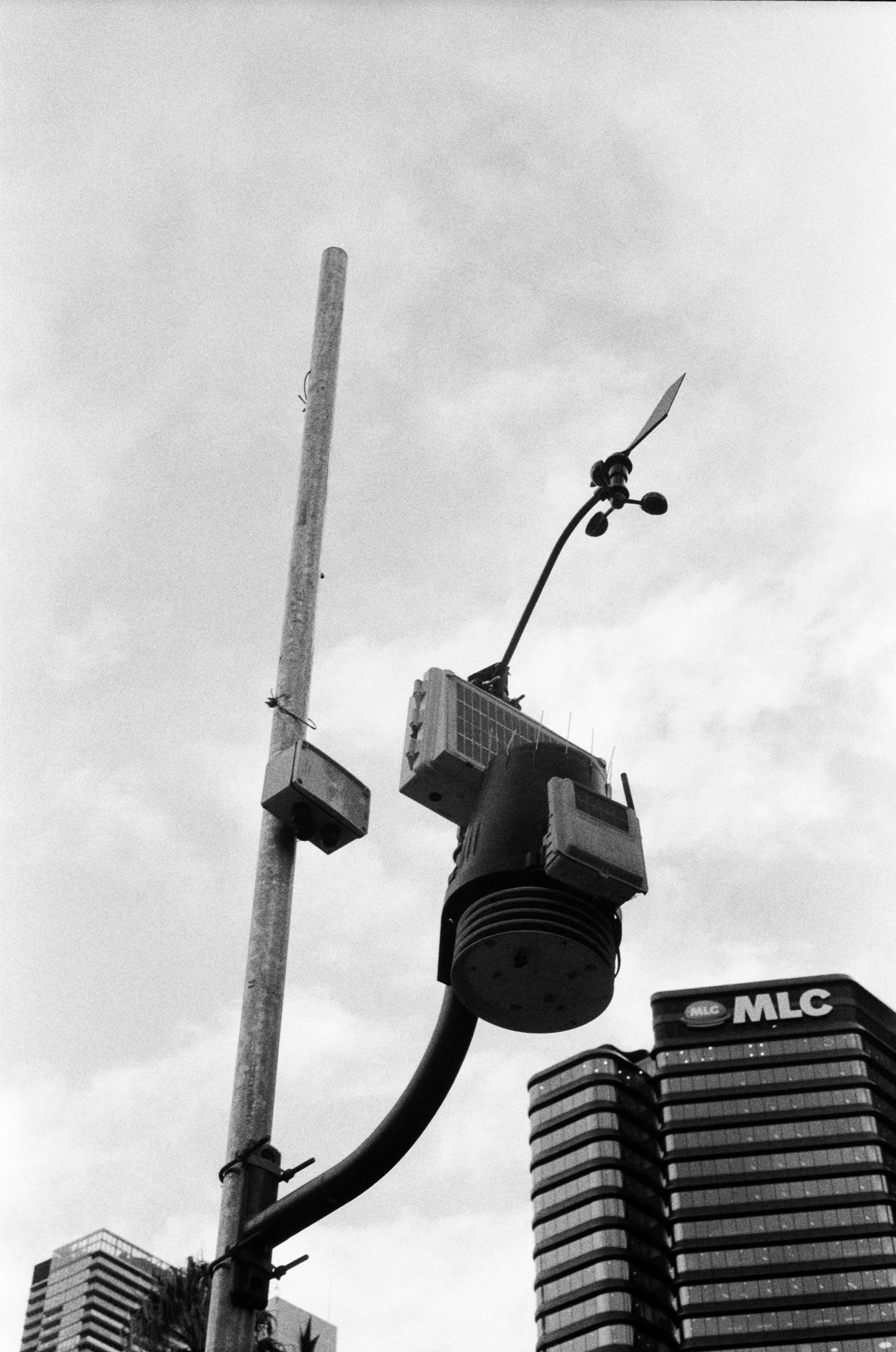
What’s your Super?
B4 printed photographic image
Nit Treatment
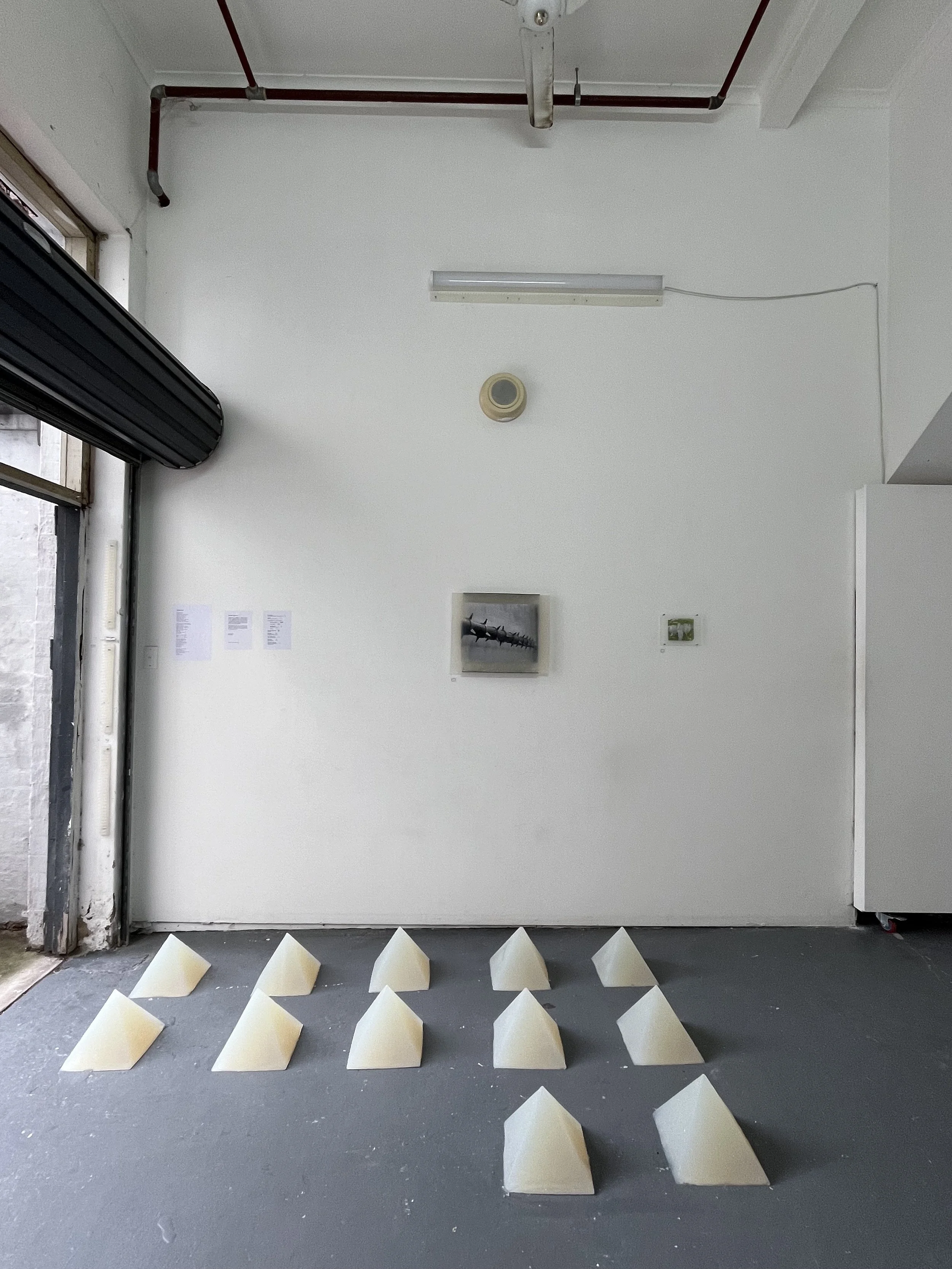
30 soap pyramids, tea tree essential oil
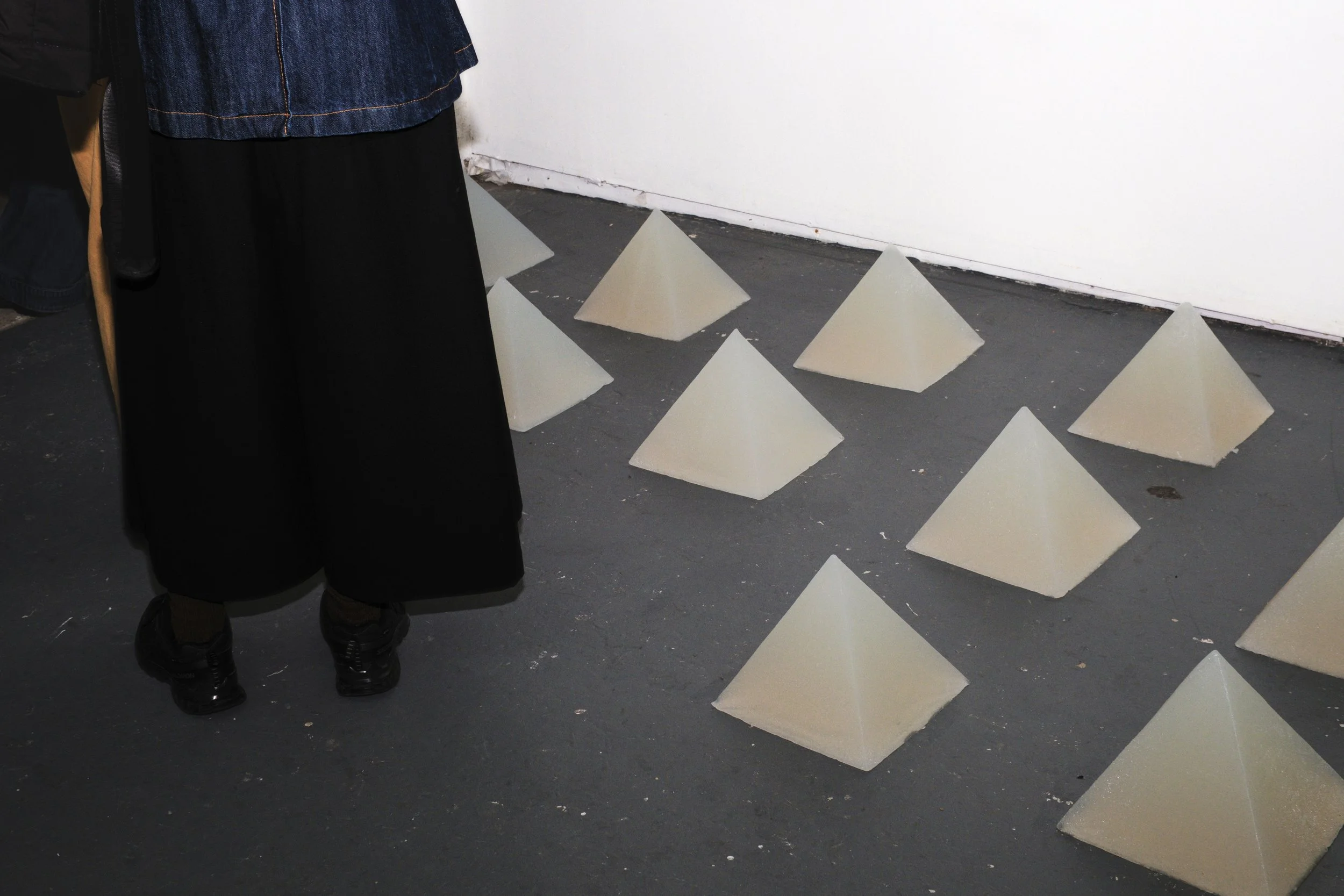
Furthering this material exploration, Payne reimagines the concrete pyramids scattered beneath bridges by casting them into soap scented with tea-tree oil. Nit treatments parallel with hostile architecture by both being irritants designed to exclude and eradicate things or people that are inconvenient and taboo. Both invade the body. Who are we combing out? Hostile architecture encodes exclusion into the angle of a surface, the placement of a stud, the geometry of a pyramid. This is a manufactured violence laundered and forcibly-made palatable through aesthetics, made to look innocuous as simply urban furniture.
Acting as a symbolic Betadine, Nit Treatment aims to literally dissolve the effects of this unethical social sanitation by underlining this similarity and then physically dismantling it through ephemerality.
Hate Letter